Why Your Charging Cable Keeps Breaking (And What to Buy Instead in the UK)

📌 Quick summary — Why cables break & what actually lasts
Most charging cables fail because of thin internal wires, weak strain relief, and cheap materials that can’t handle daily bends. A charging data cable built with reinforced connectors, braided shielding, and thicker copper cores survives real-world use — whether you’re in London, Manchester, New York, or Austin. This guide shows you exactly what to look for and where to find reliable replacements in the UK and USA.
Why Your Charging Cable Keeps Breaking (And What to Buy Instead in the UK & USA)
It’s 10:30 PM. You plug in your phone before bed, only to see the dreaded “not charging” notification. You wiggle the cable, twist it into a specific angle, and — for a second — it works. Then it dies again. Sound familiar? You’re not alone. Millions of people across the UK and US throw away broken cables every few months, assuming it’s just “how things are.”
The real frustration isn’t just the wasted money — it’s the disruption. Missed alarms, drained batteries during work calls, and the constant search for a spare cable. The good news? A properly made charging data cable can last for years, charge faster, and keep your devices safe. Here’s what you’ll learn today:
- ✅ Why 80% of cheap cables fail within 3–6 months
- ✅ The hidden design flaws most brands ignore
- ✅ Which materials and specs actually matter (UK & US standards)
- ✅ How to pick a durable, fast-charging cable without overpaying
- ✅ Where to find trustworthy options for iPhone, Android, and USB-C devices
🔌 Why do charging cables break so easily?
The short answer: planned fragility. Many low-cost manufacturers use ultra-thin 28–30 AWG wires (sometimes even recycled copper), brittle PVC jackets, and zero strain relief at the connector points. Every time you pull the cable from the plug end instead of the plastic housing, you stress microscopic solder joints. Over a few hundred bends, internal wires snap — even if the outside looks fine.
Additionally, the rise of “fast charging” (20W, 30W, 65W+) demands better conductors. Cheap cables can’t handle higher current, leading to overheating, voltage drops, and eventually internal melting. For users in the UK and USA, where we charge phones, tablets, and laptops daily, this becomes an expensive cycle of replacements.
⚡ The smarter solution: engineered charging data cables
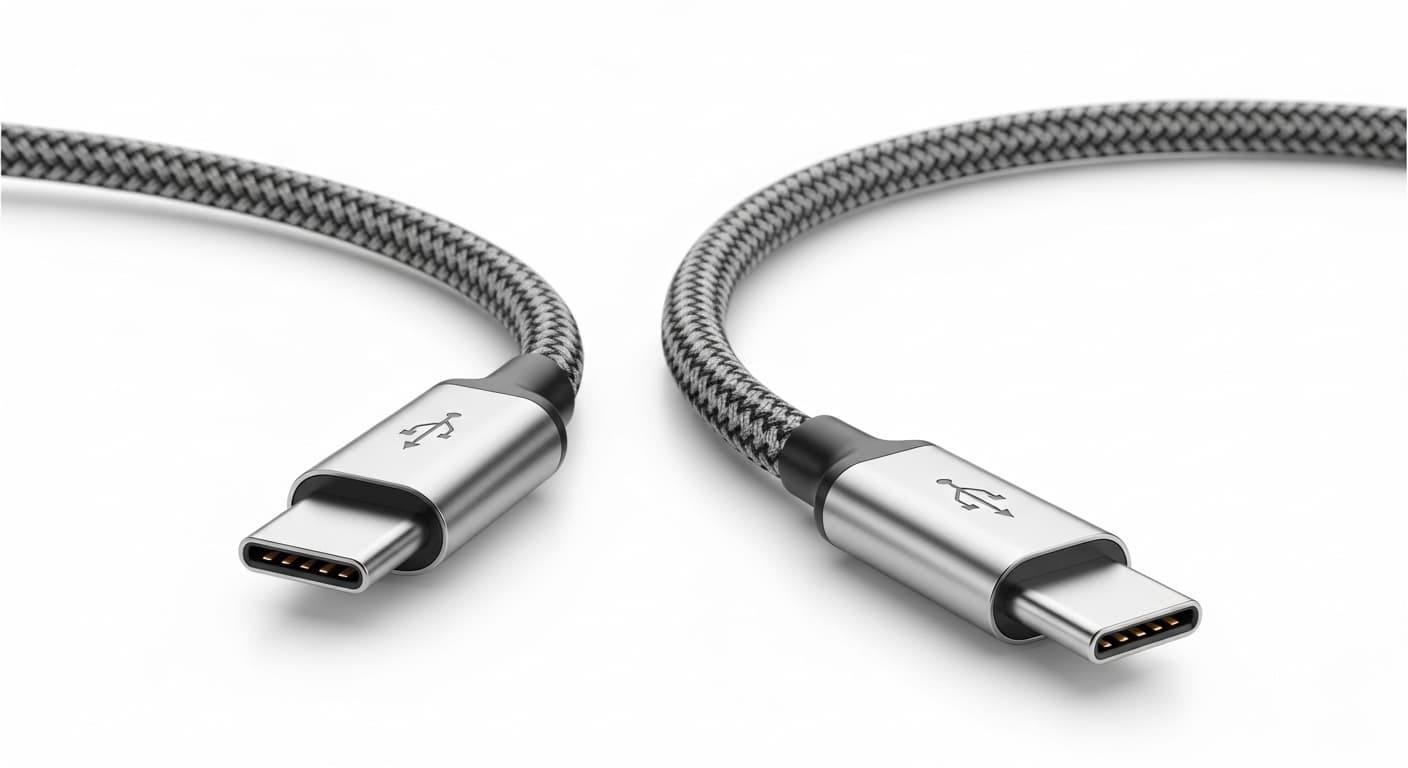
Instead of disposable cables, a charging data cable built with durability in mind solves the core issues. Look for braided nylon or TPE outer shells, laser-welded connector shells, and thickened copper wires (22–24 AWG for power delivery). These cables aren’t just tougher — they maintain stable voltage, support fast-charging protocols (PD, Quick Charge), and sync data reliably.
For UK and USA homes, where we move between cars, offices, and nightstands, a reinforced cable eliminates the daily “bend and pray” ritual. You plug it in once and forget about it.
🌟 Real benefits you’ll notice immediately
And the hidden win: fewer “low battery” emergencies during important video calls, navigation, or work deadlines. A quality cable becomes an invisible assistant in your daily routine.
🧠 Think of it like garden hoses
A cheap cable is like a thin, plastic garden hose left in the sun — it kinks, cracks, and leaks after one season. A premium charging data cable is the reinforced rubber hose with brass fittings: flexible, weather-resistant, and still going strong years later. The upfront difference is small, but the frustration you avoid is enormous. Same principle, smaller scale.
🛠️ How a durable charging cable works (simple steps)
- Thicker copper strands – allow higher current with less heat buildup.
- Dual-layer shielding – protects against interference and physical bending.
- Reinforced connector joints – a flexible “neck” (strain relief) that bends without snapping internal wires.
- Braided or TPE jacket – resists fraying, pet damage, and daily pulls.
- Smart chip integration (for USB-C) – negotiates correct voltage with your device, preventing overcurrent.
📏 How to choose the right charging data cable
What to look for:
- Wire gauge: 24AWG or lower (thicker) for power. 28AWG is too thin for modern fast charging.
- Material: Braided nylon > TPE > standard PVC. Braided resists fraying best.
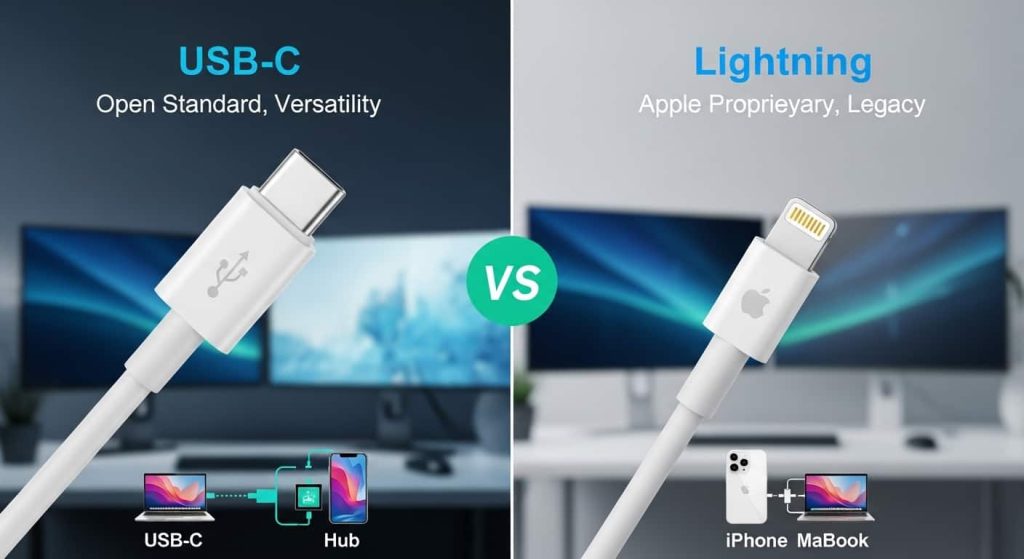
- Connector type: USB-C to USB-C (modern), USB-A to USB-C (legacy), or MFI-certified for Apple.
- Length: 1m–2m is ideal for home/office; 0.3m for power banks.
- Data transfer: USB 2.0 is fine for most, but USB 3.2 helps if you move large video files.
What to avoid: glossy ultra-thin cables with no brand markings, “fast charge” claims on 28AWG wires, and connectors that wiggle loosely out of the box.
📊 Comparison: Cheap vs. High-quality charging cable
| Feature | Cheap / Bargain cable | Quality charging data cable |
|---|---|---|
| Wire thickness | 28–30 AWG (thin, heats up) | 22–24 AWG (thick, cool operation) |
| Strain relief | None or tiny plastic stub | Long, flexible rubber/boot reinforcement |
| Outer jacket | PVC, cracks after 3–5 months | Braided nylon or dual-layer TPE |
| Safety certs | None / generic | CE, RoHS, USB-IF (for USB-C) |
| Avg lifespan | 2–6 months | 2–4+ years |
| Charging speed | Unstable, often drops to 5W | Consistent 20W–100W support |
🛒 Where to find reliable charging cables in the UK & USA
Many customers across London, Birmingham, New York, and Los Angeles have grown tired of replacing flimsy cables every few months. That’s why our curated collection focuses on certified, stress-tested charging data cables built for real-world use. We work with suppliers who prioritise thicker copper, reinforced joints, and braided exteriors — exactly the specifications that engineers recommend.
We’re a small team focused on quality over quantity. Every cable in our store is checked for fast-charging compatibility (PD & Quick Charge) and comes with a straightforward 12-month warranty. No hype, just honest products that solve the “broken cable” loop. Plus, we ship to the UK and USA within 3–7 business days, with tracking included.
👉 Explore options for iPhone, Samsung, Pixel, and USB-C laptops — without the guesswork.
❌ Common myths about charging cables
- Myth: “All cables are the same inside.”
Fact: Internal wire gauge and shielding vary massively — cheap ones use half the copper. - Myth: “Braided cables are just marketing.”
Fact: Braided nylon resists sharp bends and pet damage far better than rubber/PVC. - Myth: “Expensive means overkill.”
Fact: A £12–£18 quality cable outlasts three £5 cables, saving money and e-waste. - Myth: “Fast charging works with any USB-C cable.”
Fact: Only cables rated for 60W/100W with e-marker chips safely handle high wattage.
❓ Frequently asked questions (UK & USA buyers)
Yes — if you hate replacing cables every few months. A durable cable typically lasts 4x longer and charges faster, making it cheaper per use.
With reinforced strain relief and braided jackets, 2–4 years is realistic. Many customers still use ours after 18+ months with no visible wear.
No. Look for “60W” or “100W” rated cables with e-marker chips (especially for USB-C to USB-C). Standard 5A-rated cables handle high power safely.
Yes, longer cables (2m+) with thin wires cause voltage drop. Quality cables use thicker copper to maintain speed even at 2m lengths.
It’s safe if the store shares clear specs (gauge, certification, materials). Reputable dropshipping partners vet products before shipping — always check for CE/FCC/RoHS marks.
USB-C to C supports full Power Delivery (up to 100W+). USB-A to C is limited to legacy speeds (usually 12W–18W). For modern phones and laptops, go C-to-C.
Yes — our fulfilment partners cover all UK regions (including Highlands) and all 50 US states. Tracking is provided via email.
📦 Bottom line: stop buying disposable cables
A broken charging cable isn’t bad luck — it’s usually a sign of poor materials. By upgrading to a charging data cable with thick copper, braided shielding, and solid strain relief, you eliminate daily frustration, save money over time, and keep your devices safely powered. Whether you live in a busy flat in Manchester or a home in Texas, reliable charging should be one less thing to think about.
Trust is earned through transparency. We don’t sell £2 cables that look good in photos but fail in real life. Instead, we focus on the specifications that actually matter to UK and US users: durability, safety, and honest performance.
Free UK/US shipping • 12-month warranty • Fast support